
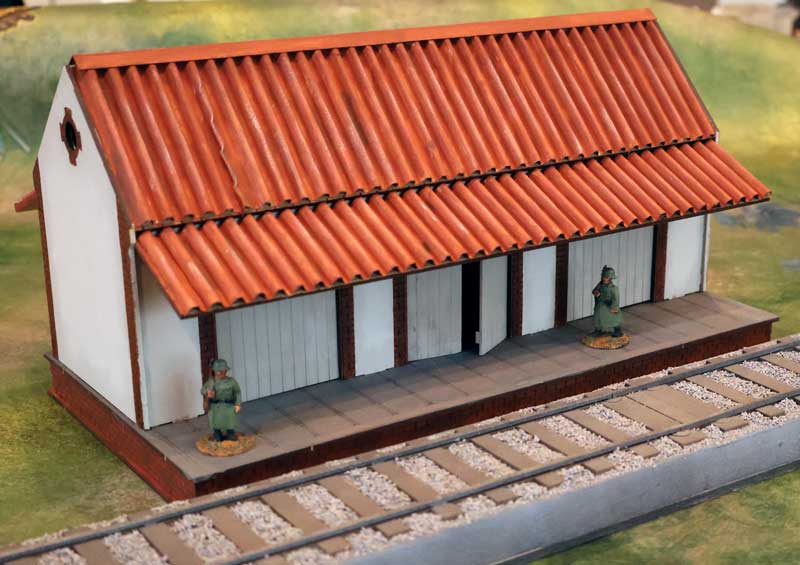
Building a Story: The Goods Shed & Its Cargo
I wanted a railroad depot/supply depot for my Eastern Front campaigns. I decided to start with a storage shed. It could easily be made of foamcore and card, but I already had a Sarissa Precision railroad Platform, so I decided to use their Goods Shed to match it.
A depot becomes a natural focal point: supplies arrive, guards stand watch, goods are transferred, and patrols provide security. It could be a game objective, held by either Russians or Germans at the beginning.
Getting the Look Right
The original kit needed some changes to fit early‑20th‑century Soviet settings.
Color Choices
I went with a muted, weathered industrial palette — dark brick tones, dusty trim, and a floor that looks like it’s seen decades of boots, crates, and spilled cargo.
The outside platform is a medium gray, with thin washes of dark brown and black. The walls are a Soviet industrial beige, darker on the inside. Thin washes show accumulated dust, dirt and grime. Soviet buildings were cheaply made and poorly maintained.
Roof Conversion
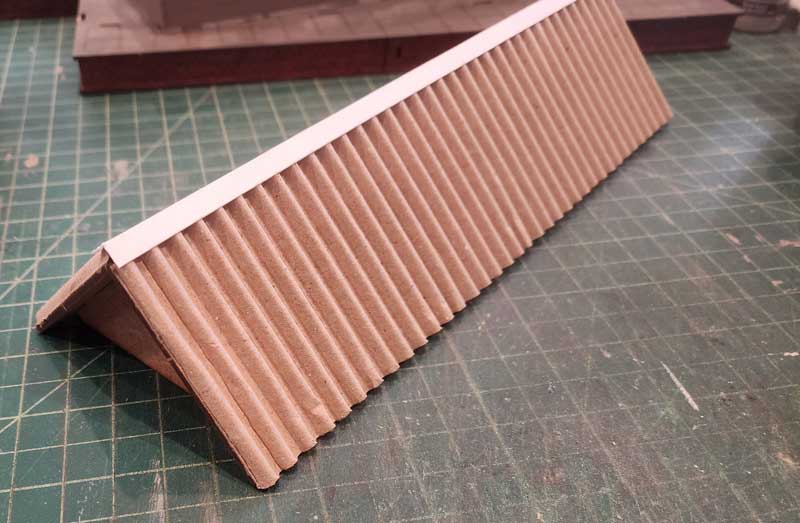
The stock roof is etched MDF in a shingle pattern—something you wouldn’t see on a Russian building. I added a corrugated layer more in line with Soviet depots and rail yards. The corrugation is from a sheet of packing material with paper on only one side. Start with Burnt Sienna for a base and add darkened patches by mixing in a brown for old rust. Highlight by adding a subtle bit of orange for new rust. Light gray adds dust and brings it to life.
Doors Tell a Story
The doors that come with the kit are gray card. If you study them, you realize they’re wrong. Doors on all such buildings open outwards, so as not to interfere with inside storage space. The doors supplied have cross-bracing on the outside, making them impossible to hinge open.
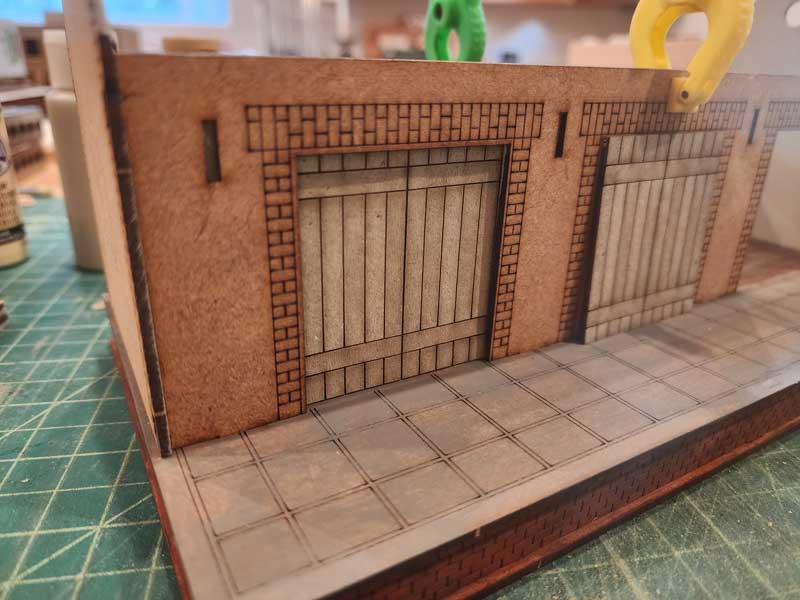
I wanted doors that could be open or closed. A locked door suggests a guarded warehouse. A half‑open door hints at activity. A blown‑open door sets the stage for a raid or sabotage scenario. Small details, big narrative impact.
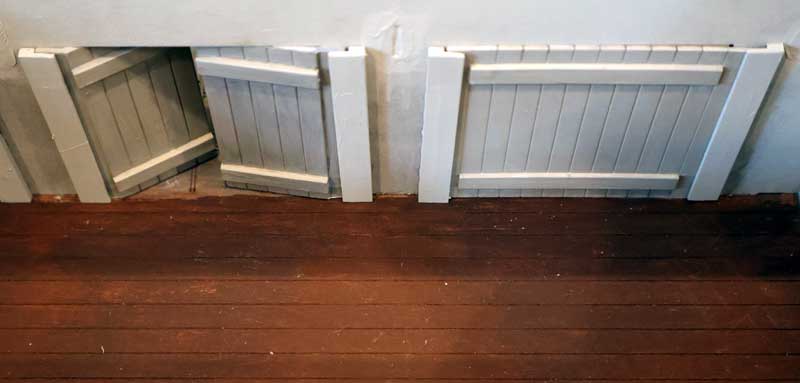
I sculpted and printed a set of closed doors and supports to hold them flush with the inside of the walls, giving shadow and depth to the openings. I also made pairs of partially open doors that slot into the same supports.
Cargo: Barrels and Crates
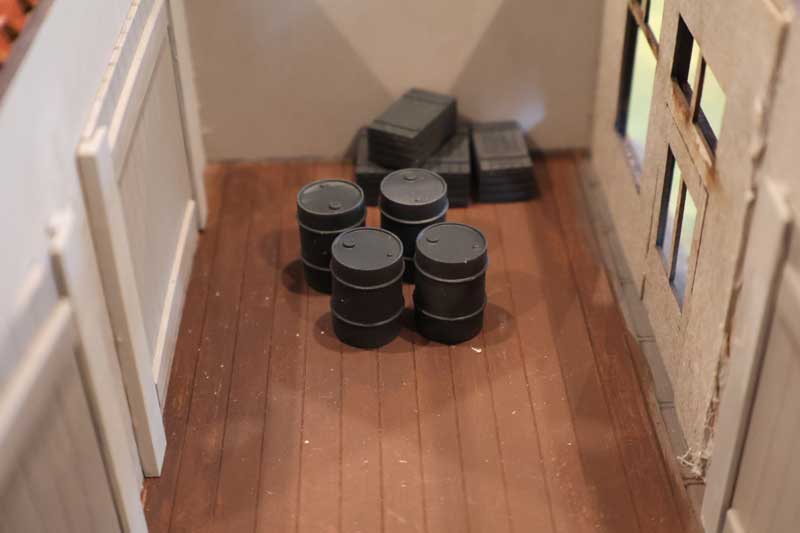
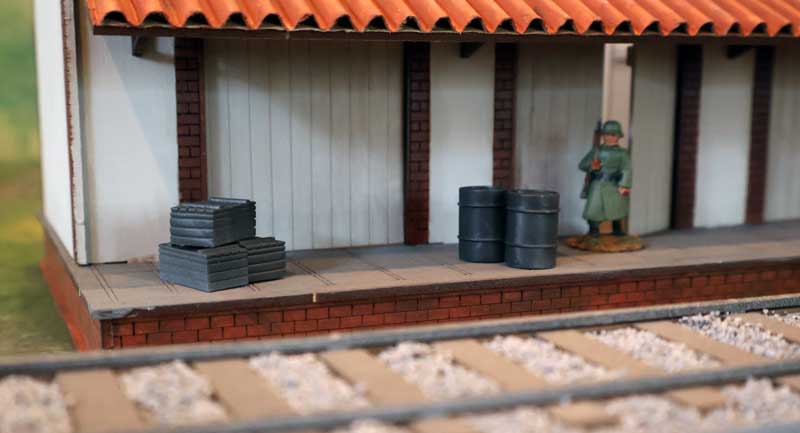
A goods shed needs goods. I placed oil barrels and wooden crates around the shed. These are pieces I’ve designed to be period‑correct and versatile — the kind of accessories that instantly make a scene feel lived‑in.
Figures Bring It to Life
A building is just a building until you put figures around it. The German Checkpoint Sentries look right at home securing the shed; troops loading or unloading cargo add motion and purpose as well.
Adapting the Shed for Other Theaters
Although this build leans into a Soviet look, it would be right at home in many places, such as:
- North Africa: lighter stone colors, sun‑bleached wood
- East Africa: a thatched roof instead of corrugated metal
- Equatorial regions: darker timbers, lush vegetation, heavier weathering
A few changes can turn the same structure into a completely different setting — and the figures tell the rest of the story: Colonial North Africa, World War II Western Desert, German East or Southwest Africa, among many choices.
Well done! I love how this came out. 🙂
And you are correct, “Terrain sets the stage, but the figures make it a story.”