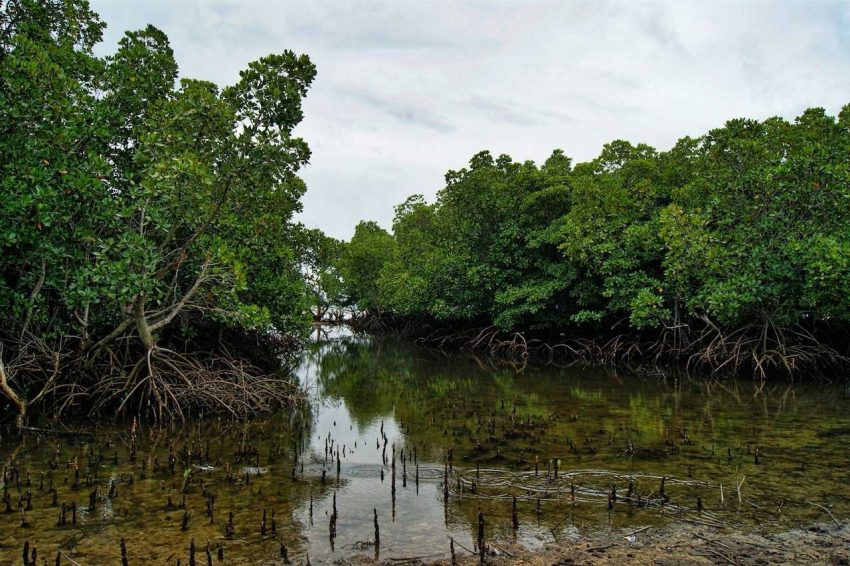
Mangrove trees aren’t the first thing most gamers think of when they picture colonial Africa, but they play a surprisingly important role in several campaigns — including the French landing zone in Madagascar. If you’re setting a game near the coast, estuaries, or tidal flats, mangroves instantly change the look and feel of the table. They create natural choke points, block line of sight, and give the battlefield a sense of place you can’t get from generic jungle scatter.
This month I built a full stand of mangrove trees for my own games, and they turned out to be one of the most satisfying terrain projects I’ve done in a while. Here’s how I made them and how you can add them to your own table.
1. Why Mangrove Trees Matter
When the French landed in Madagascar in 1895, much of the coastline they approached was lined with mangrove swamps. These weren’t deep, impassable bogs — more like tangled, root‑laced shallows that slowed movement and forced troops to pick their way through narrow channels.
On the tabletop, mangroves give you:
- Distinctive terrain that immediately signals “coastal Africa”
- Difficult ground that shapes maneuver and tactics
- Cover and concealment without being full jungle
- A unique visual element that breaks up the usual palm‑tree monotony
If you’re running scenarios around coastal landings, river mouths, or estuary approaches, mangroves belong on the board.
2. How to Build Mangrove Trees
Mangroves look complicated, but they’re actually very approachable once you break them into three parts: roots, trunk, and canopy.
Armature & Roots
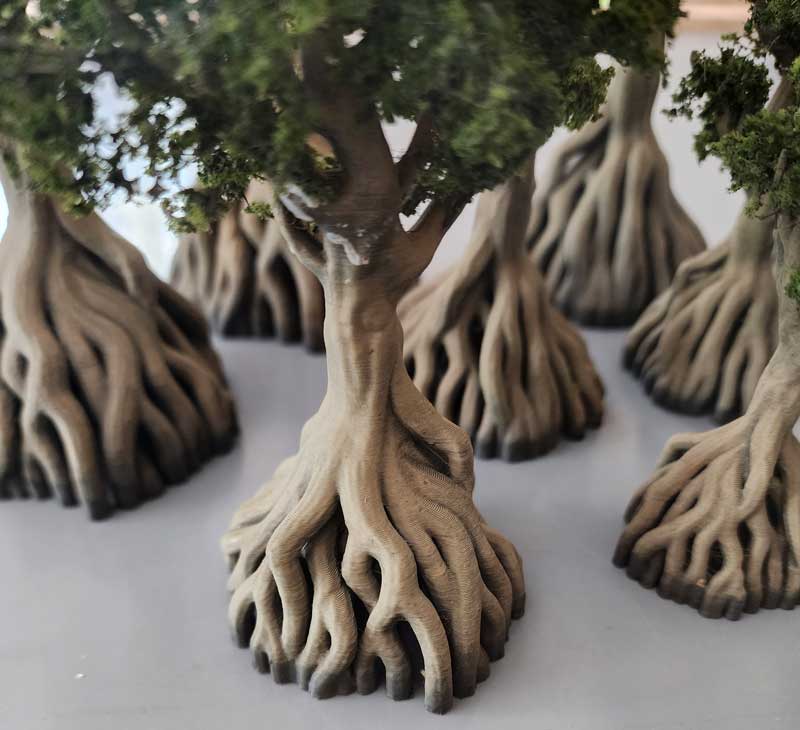
Mangroves are defined by their prop roots — those angled, stilt‑like supports that flare out from the trunk. I built mine using:
- 3D‑printed armatures (any tree armature works if you add roots)
- Thin wire or plastic rod for extra root branches
- A small irregular base for the smaller ones–the big trees stand fine on their own. I used Askari FDM-printed bases.
The trick is to angle the roots outward so the tree looks like it’s standing above the mud. Don’t worry about perfect symmetry — mangroves are messy.
Trunk & Texture
I primed the trees black, then used a simple three‑color recipe:
- Dark grey base
- Olive‑grey midtone
- Light grey drybrush
Mangrove bark is not brown; it’s a weathered grey‑green from constant salt exposure.
Canopy
Mangrove canopies are compact and rounded. I used Woodland Scenics Fine Leaf Foliage, torn into small clumps and glued to the branch tips. Superglue works, but a flexible tacky glue gives you more working time.
Keep the canopy tight — mangroves aren’t fluffy like temperate trees.
Placement on the Board
You can place them individually, so you can move them around if needed during game play. Instead, you can mount several on a single irregular base to create a mangrove stand. This gives you:
- A natural “zone” of difficult terrain
- Easy movement and storage
- Potentially a more realistic look than scattered single trees
Add a little texture paste or sand around the roots, paint it muddy, and you’re done.
3. Mangroves Today
While I was researching these trees, I learned something interesting: mangroves have been heavily over‑harvested in many parts of Madagascar. They’re incredibly valuable — they stabilize coastlines, shelter fish nurseries, and absorb carbon at rates far higher than most forests.
Because of this, Madagascar has been running mangrove conservation and replanting programs. Entire coastlines are being restored, and the results are impressive.
So when you put mangroves on your gaming table, you’re not just adding flavor — you’re representing an ecosystem that’s both historically important and ecologically vital.

Awesome build on the Mangrove..thanx..come in handy for German East Africa
Those look amazing, lots of uses.